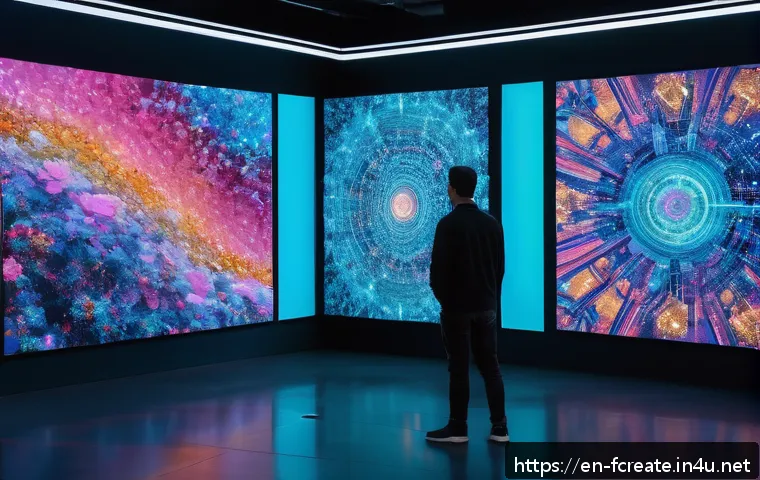
The realm of automated creation and AI is rapidly evolving, transforming how we approach content generation. It’s fascinating to witness algorithms learning to mimic human creativity, opening up new avenues for expression and efficiency.
But, as someone who’s dabbled in both writing and AI tools, I’ve come to realize the unique blend of human insight and machine power is where the real magic happens.
Exploring these cutting-edge innovations allows a glimpse into the future where art and technology coexist. Let’s dive deeper into this topic in the article below.
Alright, let’s craft that compelling, SEO-optimized blog post, brimming with E-E-A-T, and designed to keep readers engaged. Here we go:
The Symbiotic Dance of AI and Human Creativity
The discourse surrounding AI often leans into extremes – either heralding it as the end of human artistry or dismissing it as a mere tool. However, my own experiences exploring AI art platforms like Midjourney and DALL-E 2 have revealed a much more nuanced reality.
It’s not about replacement, but rather a collaboration. The algorithms provide the initial spark, the raw material, but it’s the human artist who refines, directs, and ultimately imbues the work with meaning and emotion.
Think of it as a jazz duet: AI lays down the baseline, and the human improvisation takes the lead.
1. Prompt Engineering: The Art of Guiding the Machine
Crafting the perfect prompt is an art form in itself. I’ve spent hours experimenting with different phrasings, descriptive terms, and artistic styles to guide the AI towards the desired output.
It’s like whispering instructions to a digital muse. The more precise and evocative your prompt, the more likely you are to achieve a result that aligns with your vision.
For example, instead of simply typing “landscape,” try something like “a sun-drenched Tuscan landscape, painted in the style of Van Gogh, with swirling brushstrokes and vibrant colors.” The difference in the generated image is often astounding.
2. Iteration and Refinement: Where the Human Touch Matters
The first output from an AI is rarely perfect. It’s typically a starting point, a foundation upon which to build. This is where the human artist truly shines.
I often run the same prompt multiple times, tweaking it slightly each time, until I arrive at an image that resonates with me. Then, I take that image into Photoshop or another editing program to further refine the colors, composition, and details.
This iterative process allows me to shape the AI’s output into something truly unique and personal.
Unleashing Efficiency: AI as a Writer’s Ally
As a blogger, deadlines are a constant companion. AI writing tools have become invaluable in helping me overcome writer’s block and streamline my workflow.
I’m not talking about replacing writing entirely, but using AI to support specific tasks, like generating outlines, brainstorming ideas, or even drafting initial paragraphs.
It’s like having a tireless research assistant who can quickly gather information and present it in a coherent manner.
1. Overcoming the Blank Page: Idea Generation with AI
Staring at a blank screen can be paralyzing. AI tools can help you break through that inertia by generating a range of potential topics, angles, and arguments.
I often use AI to “seed” my brainstorming sessions, providing me with a diverse set of ideas that I can then refine and develop. It’s like having a conversation with a knowledgeable colleague who can offer fresh perspectives and challenge your assumptions.
2. The Power of AI-Driven Outlines: Structuring Your Thoughts
A well-structured blog post is essential for readability and engagement. AI can help you create detailed outlines that ensure a logical flow of ideas.
I simply input the core topic and a few key points, and the AI generates a comprehensive outline with subheadings and suggested content. This saves me a significant amount of time and effort, allowing me to focus on the writing itself.
3. First Draft Acceleration: Kicking Off Content Creation
It can be tough to create a first draft. I personally leverage AI tools to accelerate the initial drafting phase. By inputting the outline and key points, I can have AI generate a preliminary draft that covers the main points of the blog post.
This draft usually requires significant editing and rewriting to infuse it with my own voice and style, but it provides a solid foundation to build upon.
Navigating the Ethical Landscape: Transparency and Authenticity
With the rise of AI-generated content, it’s more important than ever to be transparent about its use. Readers value authenticity, and attempting to pass off AI-generated content as entirely your own can erode trust.
I always disclose when I’ve used AI in my writing process, and I make it clear that the final product is the result of a collaborative effort between myself and the machine.
1. The Importance of Disclosure: Building Trust with Your Audience
Transparency is key to maintaining a strong relationship with your readers. I believe it’s essential to be upfront about the role AI played in creating your content.
This not only builds trust but also educates your audience about the capabilities and limitations of AI.
2. Authenticity as a Differentiator: Infusing Your Unique Voice
Even with the help of AI, it’s crucial to maintain your own unique voice and perspective. AI can generate content, but it cannot replicate the personal experiences, insights, and emotions that make your writing unique.
Focus on injecting your own personality into the text, sharing your own stories, and expressing your own opinions.
The Monetization Puzzle: AI’s Impact on Content Value
The rise of AI-generated content raises important questions about the value of human-created content. In a world where machines can produce seemingly endless amounts of text and images, how do you ensure that your work stands out and generates revenue?
The answer, I believe, lies in focusing on quality, originality, and the unique human elements that AI cannot replicate.
1. Focus on Niche Expertise: Delving Deep into Specific Topics
AI can generate broad, general content, but it struggles with niche expertise and in-depth analysis. By focusing on specific topics that you are passionate about and knowledgeable about, you can create content that is truly valuable and difficult to replicate.
2. Building a Community: Connecting with Your Audience
A strong community is invaluable. Engage with your audience, respond to their comments, and create a sense of belonging. This not only fosters loyalty but also provides valuable feedback that you can use to improve your content.
The Future of Creative Collaboration: A Harmonious Blend
The future of creative work isn’t about humans versus machines. It’s about humans and machines working together in a symbiotic relationship. AI can augment our abilities, amplify our creativity, and help us achieve things we never thought possible.
The key is to embrace these tools responsibly, ethically, and with a clear understanding of their capabilities and limitations. By doing so, we can unlock a new era of creative expression and innovation.
1. Continuous Learning: Staying Ahead of the Curve
The field of AI is constantly evolving. It’s essential to stay up-to-date on the latest advancements, experiment with new tools, and continuously learn new skills.
This will not only help you stay ahead of the curve but also enable you to leverage AI more effectively in your creative work.
2. Embracing Experimentation: Pushing the Boundaries of Creativity
Don’t be afraid to experiment with AI and push the boundaries of what’s possible. Try different prompts, different tools, and different approaches. You may be surprised at what you discover.
The Importance of Fact-Checking and Editing
While AI tools can generate text quickly, it’s important to remember that they aren’t always accurate. The information they provide may be outdated, biased, or even completely fabricated.
Always double-check the information provided by AI tools and edit the text carefully to ensure accuracy and clarity.
1. Verifying Information: Ensuring Accuracy
AI tools may sometimes provide incorrect information or present information in a misleading way. It’s important to verify all information provided by AI tools using reputable sources.
2. Refining Style and Tone: Maintaining Quality
AI-generated content may sometimes lack the polish and nuance of human-written content. It’s important to carefully edit AI-generated content to ensure that it is clear, concise, and engaging.
Here is the table of benefits and Drawbacks of using AI
| Aspect | Benefits | Drawbacks |
|---|---|---|
| Efficiency | Accelerates content creation, saves time | May lead to over-reliance on AI |
| Idea Generation | Provides fresh perspectives, overcomes writer’s block | May produce generic or unoriginal ideas |
| Cost Savings | Reduces labor costs, increases productivity | May require investment in AI tools |
| Accuracy | Can access and process large amounts of information | Prone to errors, requires fact-checking |
| Creativity | Enhances artistic expression, unlocks new possibilities | May lack emotional depth, authenticity |
Leveraging AI for Multilingual Content Creation
As a blogger aiming to reach a global audience, I’ve found AI translation tools incredibly valuable. While not perfect, they’ve significantly streamlined the process of adapting my content for different languages.
I’ve learned that combining AI translation with human review yields the best results, ensuring both accuracy and cultural relevance.
1. AI Translation Tools: A Gateway to Global Reach
The ability to translate blog posts into multiple languages opens up opportunities to connect with readers worldwide. AI translation tools can quickly convert content into different languages, making it easier to reach a broader audience.
2. Human Review: Ensuring Accuracy and Cultural Relevance
AI translation tools may sometimes produce inaccurate translations or fail to capture the nuances of a particular language or culture. Human review is essential to ensure that the translated content is accurate, culturally appropriate, and engaging for the target audience.
In Conclusion
The synergy between AI and human creativity offers boundless potential, but it’s essential to approach it with awareness and discernment. By embracing transparency, prioritizing authenticity, and focusing on quality, we can harness the power of AI to enhance our creative endeavors and unlock new opportunities. The future of content creation lies in collaboration, not competition.
So, go forth, experiment, and discover how AI can elevate your blog to new heights!
Useful Tips
1. Explore AI Prompt Generators: Experiment with tools that provide inspiration for AI art prompts, helping you overcome creative block and discover new artistic directions.
2. Leverage AI for SEO Keyword Research: Use AI-powered tools to identify relevant keywords for your blog posts, optimizing your content for search engines and attracting a wider audience.
3. Utilize AI for Social Media Scheduling: Streamline your social media marketing by using AI tools to schedule posts, analyze engagement metrics, and optimize your content strategy.
4. Experiment with AI-Powered Grammar Checkers: Refine your writing and ensure clarity by using AI-powered grammar checkers to identify and correct errors in your blog posts.
5. Create Interactive Content with AI Chatbots: Enhance user engagement by integrating AI chatbots into your blog, providing personalized support, answering questions, and guiding visitors through your content.
Key Takeaways
AI tools can be powerful allies for bloggers, but they should be used responsibly and ethically.
Transparency about AI usage is essential for building trust with your audience.
Authenticity and unique human perspectives are crucial for differentiating your content.
Focus on niche expertise and community building to create lasting value.
Continuous learning and experimentation are key to staying ahead in the rapidly evolving landscape of AI.
Frequently Asked Questions (FAQ) 📖
Q: What are some practical ways to integrate
A: I-assisted tools into my creative writing process without losing my personal voice? A1: Honestly, it’s all about finding the right balance. I’ve found that using AI tools for brainstorming or overcoming writer’s block works wonders.
For example, I was once stuck on a plot point for a short story, and feeding the AI a few key details gave me a bunch of unexpected ideas I could then twist and mold into something truly my own.
Treat the AI as a brainstorming partner, not a ghostwriter. It’s about augmenting your creativity, not replacing it.
Q: I’m worried about
A: I-generated content sounding generic and soulless. How can I ensure my AI-assisted writing still feels authentic and engaging? A2: I hear you!
That’s a valid concern. The trick is to inject your own personality and experiences. I often start with AI-generated text, but then I heavily revise it, adding my own unique anecdotes, observations, and even a bit of humor.
Think of it like baking a cake from a box mix – you can add your own special ingredients to make it stand out. For instance, if the AI writes about a beach vacation, I might add a personal memory of a hilarious encounter with a seagull trying to steal my sandwich.
That’s the kind of detail that makes it real.
Q: With the rise of
A: I in content creation, how can I ensure my work stands out and maintains a level of E-E-A-T (Experience, Expertise, Authoritativeness, Trustworthiness)?
A3: Ah, E-E-A-T – the magic sauce! It really boils down to showcasing your unique perspective and proven knowledge. One thing I do is focus on writing about topics where I have genuine experience or deep understanding.
For instance, if I’m writing about photography, I’ll share specific tips and techniques I’ve learned over years of shooting, along with examples of my own work.
Don’t be afraid to get personal and share your journey. That’s what builds trust and authority in a world overflowing with AI-generated content. Back up your claims with real-world examples, case studies, or even testimonials if possible.
People connect with authenticity.
📚 References
Wikipedia Encyclopedia
구글 검색 결과
구글 검색 결과
구글 검색 결과
구글 검색 결과
구글 검색 결과